
Custom AI for Work and Life
We have helped over a dozen people build dedicated AI
assistants around needs that looked almost nothing alike. One
was a small-business owner balancing client communication, CRM
planning, process documentation, and several operational
projects. The other was a retired mechanical engineer who
wanted a practical partner for product research, home
automation, travel, recipes, and everyday problem-solving. A
blank chatbot could answer isolated questions, but it could not
remember either person’s world or become part of how they
worked.
One assistant ran on a dedicated Mac Mini; the other gave an
older iMac a useful second life. We configured each system with
persistent memory, its own communication style and operating
instructions, relevant files, voice support, messaging, tools,
safety boundaries, and follow-up support.
The business assistant was prepared to draft client follow-ups,
organize workflows, create SOPs, and identify recurring work
and automate it. The personal assistant learned to be direct,
practical, and value-conscious, then helped with voice messages,
automated backups, smart-light control, recipes, and practical
research.
Outcome: Each person has an AI assistant shaped around the way
they live or work. It remembers context, handles useful tasks,
and can expand as their needs change.

Research Too Big for One Agent
Some questions are too large for one AI conversation. The
evidence may be spread across hundreds of sources, several
kinds of data, conflicting expert opinions, and years of
internal material. The final answer also has to be clear,
traceable, and useful enough to support a real decision.
For work at that scale, we build AI research teams.
One of our systems runs as a standing research fleet. Seven
specialist agents watch different parts of a fast-moving field
and keep separate research notebooks. A Foreman reads across
their work, finds what actually changed, and turns it into a
short list of decisions and opportunities. A Coordinator checks
for repeated work, weak evidence, and agents drifting away from
their assignments. Another monitor simply makes sure the fleet
is alive and current.
Other systems are built for one massive question. Several
research agents divide the subject and investigate different
angles at the same time. Their findings pass through a human
review before writing agents turn them into sections. Critics
then try to break the argument, expose unsupported claims, and
identify what still needs human research. The work is revised
only after it survives that challenge.
We also build repeatable research pipelines for commercial
teams. A plain-English request enters the system, which finds
possible opportunities, removes duplicates, scores what
deserves attention, connects every important claim to a source,
and turns the strongest findings into practical briefs. The
pipeline remembers what it has already researched, what still
needs work, and what should be ignored.
These systems keep running because the questions keep changing.
We use them to monitor markets, investigate opportunities,
prepare strategic decisions, build sales intelligence, and help
people get up to speed on unfamiliar subjects without drowning
in tabs and half-finished notes.
Outcome: The immediate result might be a report, decision
packet, research library, or ongoing intelligence feed. The
larger result is a research capability you can use again.
KaiSpark can design the team, build the review process, run the
first project with you, and teach you how to direct it yourself.
When the next enormous question arrives, you already have a
research operation ready to go.

200 Product Records. Ten Minutes.
A specialty products company had more than 200 product records
scattered across supplier spreadsheets, old price lists, sales
exports, PDFs, and years of manually maintained notes. The same
products appeared under different names. Costs and retail
prices had been updated in some files but not others.
Categories overlapped, descriptions were inconsistent, and
nobody had a complete view of what the company sold or how each
product actually performed.
Cleaning it manually would have taken days. More importantly,
the disorder was hiding decisions the company needed to make.
We worked with the team to identify which information mattered:
product names, suppliers, costs, selling prices, margins, sales
history, and category relationships. Together, we decided what
could be automated, what required judgment, and how conflicting
records should be handled. We then built a custom agentic
workflow to read the source files, reconcile duplicates,
standardize the data, calculate margins, group related
products, and produce a clean master catalog with a separate
list of anything that still needed review.
We expected the workflow to run for several hours. Ten minutes
later, it had processed the entire backlog and produced
organized, usable spreadsheets. The team tested the outputs
against the original files, and the information was right the
first time because we had spent our time defining the inputs
and rules before asking the system to do the work.
The immediate savings were obvious: days of manual cleanup
disappeared, and the company now had a repeatable way to process
future records. But the organized data also revealed something
more valuable. One of its strongest-margin product categories
had been treated like a minor part of the business, while
several popular low-margin products pointed toward adjacent
items the company did not yet offer. The team left with ideas
for new bundles, better pricing decisions, and an expanded
product category that could create revenue instead of merely
reducing costs.
Outcome: More than 200 fragmented product records became a
reliable business tool in ten minutes. The company cut the cost
of a tedious administrative project, gained a clearer view of
its margins, and discovered practical opportunities to sell
more of the right products. The project also changed how the
team viewed AI: not simply as a way to do existing work faster,
but as a way to uncover value that had been sitting inside the
business all along.
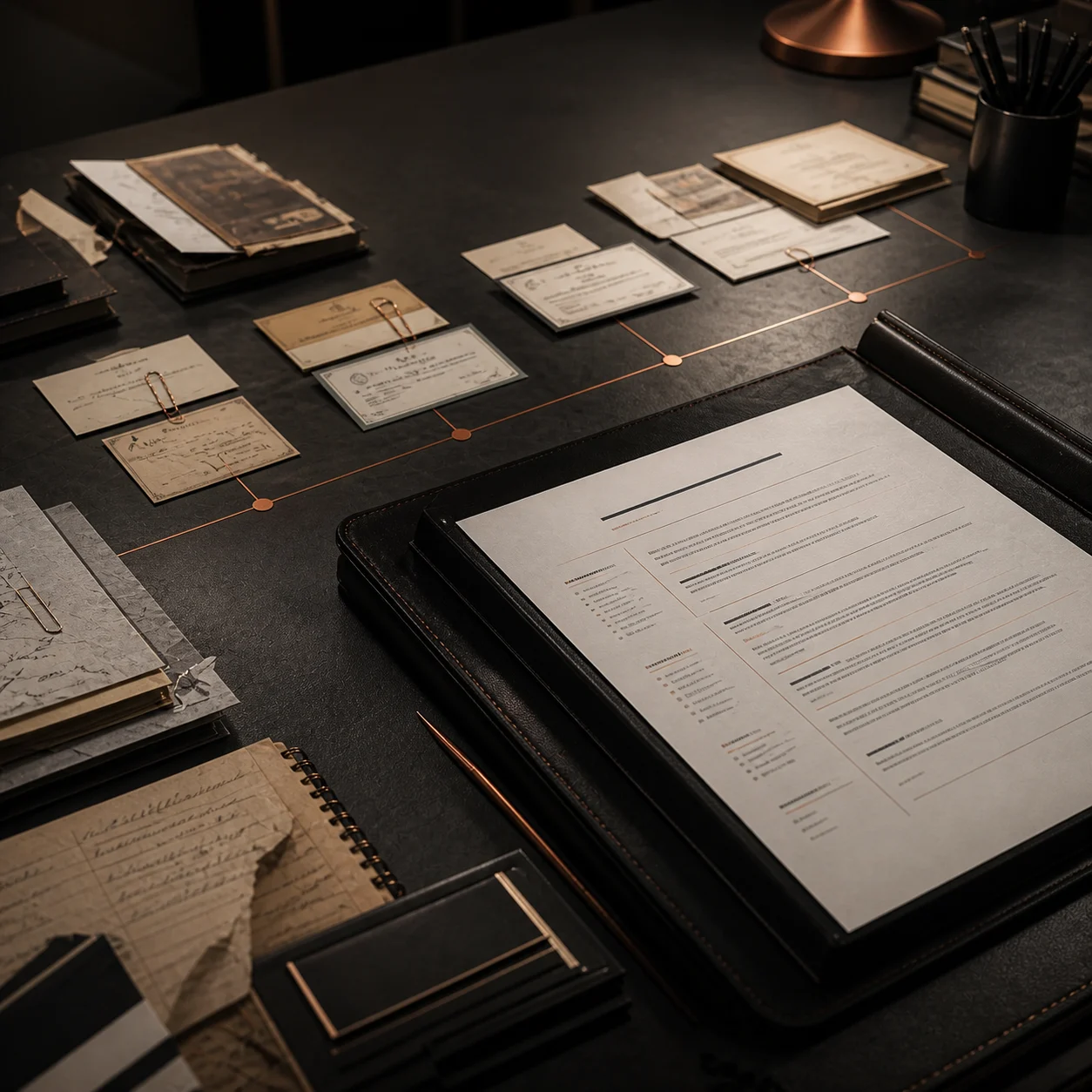
Resumes Built for Career Growth
We worked with professionals whose resumes were falling
short for completely different reasons. One had a decade of construction
leadership obscured by a nonlinear recent work history. Another
had managed hundreds of client accounts, high-volume billing,
and large service teams, but the scale of that work was buried.
A retail manager had grown into hiring, scheduling, inventory,
training, and daily department leadership without translating
those responsibilities into a stronger career story. Another
professional was preparing for a specialized internal move and needed
to show readiness without overstating experience.
We used AI to organize years of source material, compare each
person’s experience against the roles they wanted, identify
missing facts and metrics, resolve timeline gaps, and surface
the follow-up questions that generic resume tools miss. Then we
rebuilt each resume around a clear, honest argument for why that
person deserved an interview.
Outcome: Role-specific resumes grounded in real experience and
built around where they wanted to go next. Scattered job
histories became clear, credible career stories that made their
value easier to understand and gave them stronger material for
applications, interviews, and future opportunities.